
Pool water can look perfectly fine one week and turn cloudy, green, or scaly the next. In Dallas, the heat, sun exposure, and heavy pool use during the warmer months speed up these changes more than most homeowners expect. At Integrity Pools, we walk homeowners through these issues on service calls all the time, and the good news is that most water problems have a clear cause and a straightforward fix once you know what to look for.
This guide covers 12 of the most common pool water issues we see, why they happen, and what to do about each one.
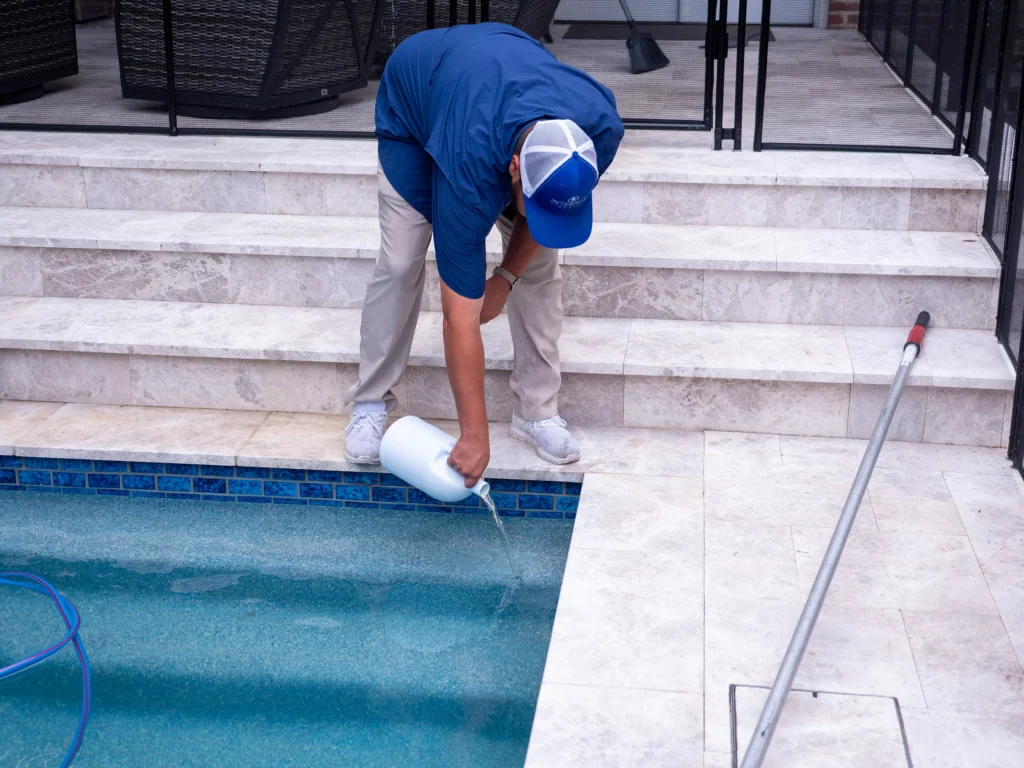
Why Pool Water Problems Happen
Pool water chemistry is a balancing act. Chlorine, pH, alkalinity, and mineral levels all interact with each other, and a shift in one usually throws off the rest. Sun exposure burns off chlorine faster, rain and refills dilute chemical levels, and heavy swimmer use adds oils, sweat, and debris that chemicals have to work harder to break down. Add in Texas heat, and small imbalances can turn into bigger problems within days if they go unchecked.
Regular testing and a consistent maintenance routine catch most issues early, before they become expensive to fix.
12 Common Pool Water Problems and How to Fix Them
Here are the issues homeowners run into most often, along with what usually causes them and how to correct course.
1. Cloudy or Hazy Water
Cloudy water is usually a sign of poor filtration, high pH, or a chlorine level that has dropped too low to keep the water clear. It can also happen after heavy rain or a big pool party.
Fix: Run the pump for longer cycles, check and clean the filter, and shock the pool if chlorine has dropped below the recommended range. Clarity usually returns within a day or two once chemistry is back in range.
2. Green or Algae-Tinted Water
A green tint almost always points to algae growth, triggered by low chlorine, warm water, and sunlight. Phosphates from fertilizer runoff or organic debris can make it worse.
Fix: Shock the pool, scrub the walls and steps thoroughly, and keep the pump running continuously until the water clears. A follow-up algaecide treatment can help prevent a repeat bloom.
3. High Calcium Hardness
When calcium hardness climbs too high, the water becomes hard water, which leaves the surface prone to scaling and can make the water look dull or cloudy over time.
Fix: Partially draining and refilling the pool with fresh water lowers calcium levels. A pool professional can test hardness accurately and recommend how much water to replace.
4. Total Alkalinity Out of Range
Total alkalinity acts as a buffer that keeps pH stable. When it drifts too high or too low, pH becomes difficult to control and swings unpredictably, which affects everything else in the water.
Fix: Add sodium bicarbonate to raise alkalinity, or muriatic acid to lower it. Retest 24 hours after adjusting, since alkalinity changes slowly.
5. High Cyanuric Acid (Stabilizer Buildup)
Cyanuric acid protects chlorine from breaking down in sunlight, but too much of it makes chlorine far less effective at killing bacteria and algae, even when levels test normal.
Fix: Since cyanuric acid only leaves water through draining, a partial drain and refill is typically the only reliable way to bring it back down.
6. High TDS (Total Dissolved Solids)
Over time, minerals, chemicals, and debris build up in the water as dissolved solids. When TDS climbs too high, chemicals stop working efficiently, no matter how carefully they’re added, and water can take on a dull, cloudy appearance.
Fix: A partial or full drain and refill is usually the only fix once TDS climbs past the recommended threshold.
7. Salt Level Imbalances
For saltwater pools, salt levels that run too low reduce the salt cell’s ability to generate chlorine, while levels that run too high can damage equipment and irritate skin.
Fix: Test salt levels regularly with a dedicated test strip or digital reader, and add pool salt in small amounts based on your system’s specifications.
8. Calcium Buildup and Scale
White, flaky deposits along the tile line or a rough, gritty texture on the pool surface are signs of calcium buildup, usually tied to high calcium hardness or high pH.
Fix: Light scale often responds to a scale remover product and manual scrubbing. Heavy, stubborn buildup may require acid washing, which should be handled by a trained technician to avoid damaging the pool surface.
9. Stains on Plaster or Tile
Not all stains are the same. Organic stains from leaves and debris usually look brown or greenish, while metal stains from iron or copper often show up as rust colored or blue-green marks.
Fix: Identifying the stain type first matters, since the wrong stain treatment can make certain metal stains worse. A water test can confirm what’s causing the discoloration before any product is applied.
10. Weak Water Circulation
Poor pool circulation creates dead spots where debris settles, and algae takes hold, even when chemical levels test fine elsewhere in the pool.
Fix: Check that return jets are angled to push water across the entire pool, confirm the pump is running long enough each day, and clear any blockages in the skimmer or returns.
11. Pump or Filter Problems
A weak pool pump or a dirty filter cuts down on both circulation and filtration, which shows up as cloudy water, slow debris pickup, or a pump that runs louder than usual.
Fix: Clean or backwash the pool filter regularly, check for air bubbles at the returns, which often signal a suction leak, and have the pump inspected if it’s making unusual noises or losing pressure.
12. Water Loss and Suspected Leaks
Some water loss is normal from evaporation, especially during hot North Texas summers. But water dropping more than a quarter inch a day, or dropping only when the pump is running, points to a real leak.
Fix: A simple bucket test can help confirm whether the loss is from evaporation or an actual leak. If a leak is suspected, professional pool leak detection can pinpoint the source before it leads to costly pool leak repair or structural damage.
Tools That Help You Stay Ahead of Problems
A few tools make it much easier to catch pool water issues early, before they turn into bigger fixes:
Water test kits: Test at least once a week to track chlorine, pH, alkalinity, and hardness before they drift out of range.
Pool brush: Regular brushing of walls and steps prevents algae from taking hold in the first place.
Pool vacuum: Removing debris from the floor keeps water clearer and reduces strain on the filter.
Pool automation: Automated systems can monitor and adjust chemical levels between manual checks, which is especially helpful during the busiest swim months.
When to Call a Pool Professional
Some water problems are quick DIY fixes. Others, like persistent scale, chronic algae blooms, or a suspected leak, are worth bringing in a professional for. A qualified pool cleaning service can test water accurately, correct chemical balance issues that keep coming back, and catch equipment problems before they turn into a full pool renovation.
We work with homeowners throughout Dallas, North Texas, and the surrounding DFW area, including Park Cities, University Park, and Preston Hollow, as well as pool owners further out near Marble Falls and Horseshoe Bay. Consistent pool maintenance goes a long way toward keeping water clear and equipment running well season after season.
Get Your Pool Water Back on Track
Most pool water problems are manageable once you know the cause, but staying ahead of them takes more than a one-time fix. Small imbalances turn into bigger, costlier ones fast in Texas heat, which is why regular testing and a consistent care routine matter as much as knowing how to react. If your water isn’t cooperating no matter what you try, reach out to Integrity Pools today for a free estimate, and our team will get things back on track before a small issue turns into a bigger repair.
FAQs
How often should I test my pool water?
At least once a week during swim season, and more often during heavy use or after heavy rain.
Can I fix cloudy water without draining the pool?
Usually, yes. Most cloudy water clears up with proper filtration and chemical adjustment, without needing a drain.
Is a green pool always algae?
Green water is almost always algae, though metal contamination can sometimes cause a similar tint. A water test can confirm which one you’re dealing with.
How do I know if my pool has a leak?
A bucket test is the easiest first step. If water loss continues beyond normal evaporation, it’s worth having a professional confirm the source.